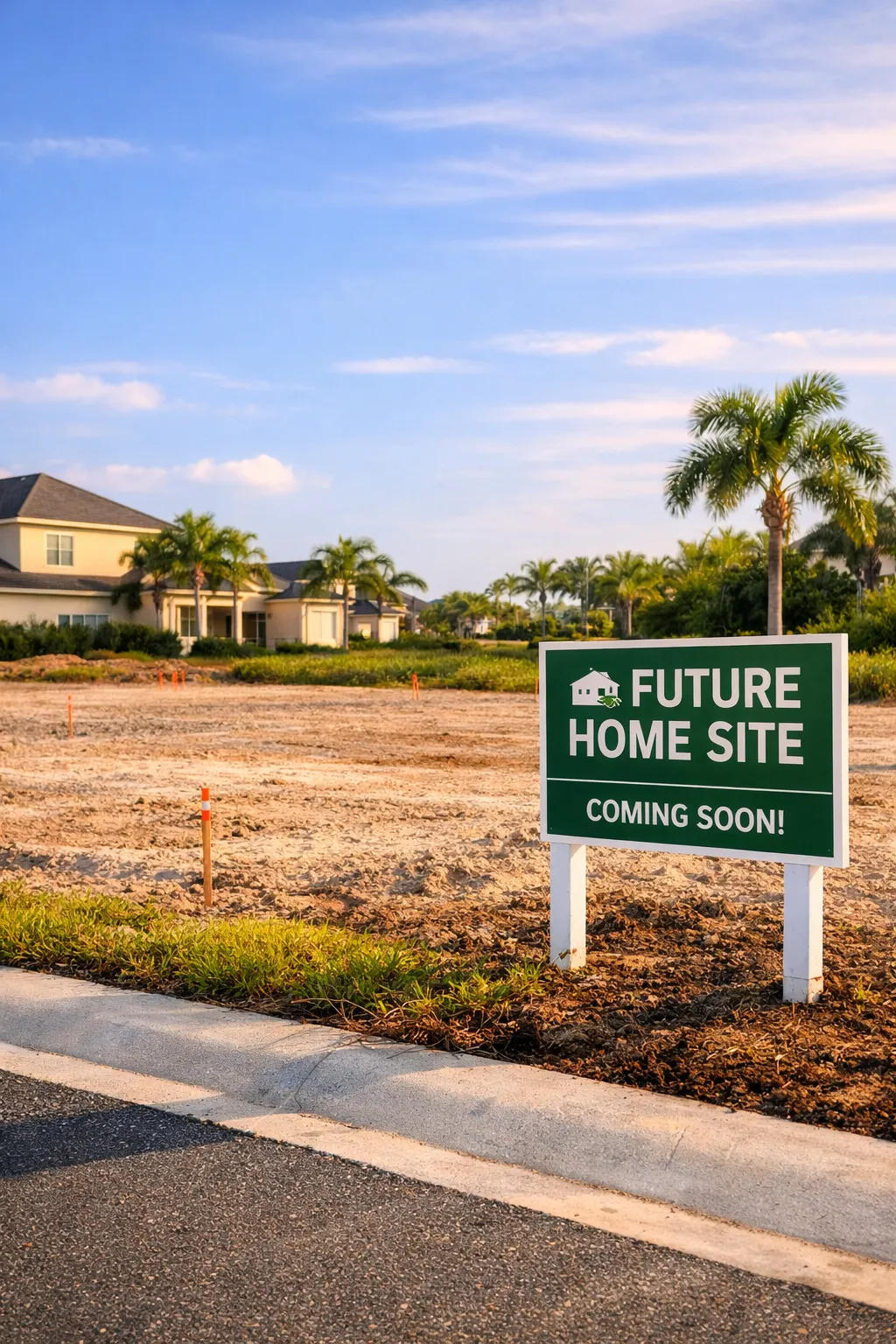
How Much Does It Cost to Build a Home in Palm Bay, Florida in 2026?t
THE VILLALOBOS GROUP | VG-003
THE VILLALOBOS GROUP
How Much Does It Cost to Build a Home in Palm Bay, Florida in 2026?

A practical guide to construction costs, lots, site work, utilities, upgrades, financing, and the expenses buyers often overlook
Planning answer
For an early 2026 planning conversation, many Palm Bay buyers should treat roughly $160 to $250+ per conditioned square foot as a broad house-construction range before the lot and many project-specific expenses. A straightforward production or local-builder plan may fall near the lower portion; semi-custom, custom, complex sites, premium finishes, and larger structural changes can move well above it. This is a budgeting framework - not a builder quote.
Why There Is No Single Price Per Square Foot
The price to build is not determined by square footage alone. Two 2,000-square-foot homes can have very different budgets because of the floor plan, roof design, ceiling heights, window package, garage size, porch area, site conditions, utility system, finish level, builder model, and financing structure.
Nationally, the National Association of Home Builders 2024 Construction Cost Survey reported an average construction cost of $428,215 for a 2,647-square-foot home, or about $162 per square foot. The survey is not a Palm Bay price sheet and should not be used as a local quote, but it is a useful benchmark showing that actual construction is only one component of the final home price.
The U.S. Census Bureau reported a national median new-home sales price of $424,900 in May 2026. That figure includes homes, lots, builder overhead, financing, sales expenses, and profit across many markets; it does not tell a Palm Bay lot owner what a custom build will cost.
The Seven Main Parts of a Palm Bay Build Budget
1. The Lot
A vacant lot may be owned free and clear, financed separately, or included in a builder package. Price is only the beginning. Buyers should confirm zoning, dimensions, setbacks, road access, flood information, drainage, soil conditions, protected-species concerns, utility availability, and whether unusual clearing or fill may be needed.
2. The Base House or Construction Contract
This is the builder's starting price for the plan and included specifications. It may cover the foundation, structure, roof, windows, mechanical systems, standard cabinetry, flooring, fixtures, driveway, and basic landscaping - but inclusions vary widely. A low base price can become expensive after lot premiums, structural changes, design selections, and site work.
3. Site Preparation and Lot-Specific Work

Clearing, fill, grading, soil testing, compaction, drainage, culverts, driveway length, retaining needs, tree removal, hauling, and difficult access can materially change the budget. Site costs are often the largest unknown until the builder completes the required evaluation.
4. Permits, Reviews, and Impact Fees
A new home may require building-permit fees, plan review, inspections, impact fees, and other project-specific charges. Palm Bay publishes its current building fee schedule, and Brevard County explains that residential impact fees are one-time charges generally collected during the permitting process. The responsible party and whether these costs are included in the contract must be confirmed.
Review the City of Palm Bay building and fee information and the Brevard County impact-fee guidance for current official information.
5. Water, Sewer, Well, and Septic
Utility costs depend on the property. City service may require capital charges, line-extension charges, meters, deposits, and private-side plumbing work. Palm Bay currently lists estimated initial connection costs for a standard 80-foot lot of $4,347.98 for water and $5,770.40 for sewer, with fees subject to change. Properties without city service may need well and septic systems, which require separate design, permitting, installation, and maintenance planning.
Use the city's utility service-availability and connection-cost page to begin the address-specific research.
6. Structural Options and Interior Upgrades

The most common budget increases come from three-car garages, bonus rooms, expanded lanais, higher ceilings, taller doors, impact windows, additional glass, cabinet upgrades, quartz or specialty surfaces, tile throughout, upgraded showers, electrical additions, pools, outdoor kitchens, and major plan changes.
7. Financing, Carrying Costs, and Reserves
Construction-permanent loans may involve appraisal, inspections or draws, interest during construction, closing costs, reserves, and conversion terms. Cash buyers still need contingency funds for changes, delays, site discoveries, furnishings, window treatments, landscaping, fencing, and post-closing projects.
A Practical Cost Framework
The following examples are planning illustrations, not quotes. They show why a buyer should separate the house cost from the all-in project cost.
EXAMPLE
CONDITIONED AREA
HOUSE-CONSTRUCTION RANGE
BEFORE LOT & MAJOR EXTRAS
Efficient plan
1,600 sq ft
$256,000-$352,000
$160-$220/sq ft
Move-up plan
2,200 sq ft
$374,000-$528,000
$170-$240/sq ft
Larger/semi-custom
2,800 sq ft
$504,000-$700,000+
$180-$250+/sq ft
These illustrations do not automatically include the lot, unusual site work, utility connections, permit and impact fees, financing, pool, extensive landscaping, fencing, premium appliances, furniture, or buyer-requested changes. Some builders package several of these items into one price; others list them separately.
Why Builder Advertised Prices Can Be Misleading
The advertised price may apply only to a specific plan and standard elevation.
The lot may not be included.
The price may assume a standard site with limited clearing and fill.
Design-center selections may be additional.
A garage, porch, outdoor kitchen, pool, or impact-glass package may be optional.
Incentives may require a preferred lender or title provider.
The published price may not include buyer closing costs, construction-loan expenses, or interest during construction.
Production, Semi-Custom, and Custom: What Changes?
Production or Repeated-Plan Builder
Usually offers the strongest cost control because the builder repeats plans, specifications, and purchasing. Choices may be more limited, and the home may be in a planned community or on approved scattered lots.
Semi-Custom Builder
Allows more structural and finish flexibility while still working from established plans. The buyer gains personalization, but changes can raise design, engineering, permitting, labor, and material costs.
Fully Custom Builder
Creates a home around the buyer, lot, and design goals. Architectural work, engineering, site complexity, premium materials, and one-off details generally make budgeting and scheduling more complex.
Questions to Ask Every Builder
Is the lot included in the quoted price?
What is included in the base specification?
What site-work allowance is included, and what happens if actual costs exceed it?
Are permit fees, impact fees, utility connections, well, or septic included?
Which structural options and design selections are already in the price?
Are price increases or material escalation clauses allowed?
What deposits are nonrefundable?
Which lender or title company is required for incentives?
How are change orders priced and approved?
What is the estimated cash to close and monthly payment after all costs?
What warranty and post-closing service are included?
What contingency amount should the buyer maintain?
How Much Contingency Should a Buyer Keep?
A buyer should not use every available dollar for the contract price. The appropriate reserve depends on the contract, site certainty, builder allowances, financing, and how many selections remain open. As a practical planning approach, discuss a dedicated contingency with the lender and builder before signing, and keep separate funds for moving, window treatments, appliances not included, landscaping, fencing, and furnishings.
The Most Important Comparison: All-In Cost
The right comparison is not simply Builder A at $190 per square foot versus Builder B at $210. Compare the lot, conditioned and non-conditioned space, specifications, site work, utilities, permits, fees, financing, incentives, warranty, timeline, and post-closing needs. A higher base price can be the better value when it includes more of the completed project.
The Consumer Financial Protection Bureau homebuying tools can help buyers organize financing and closing-cost questions. Flood information should also be reviewed through the FEMA Flood Map Service Center before finalizing a lot or construction plan.
Final Answer
So, how much does it cost to build a home in Palm Bay in 2026? A broad early-planning range of approximately $160 to $250+ per conditioned square foot may help start the conversation for house construction, but the all-in budget can be substantially higher after the lot, site work, utilities, permits, impact fees, options, financing, and reserves are added.
The only dependable number is a written, lot-specific proposal with clearly defined specifications, allowances, exclusions, financing terms, and change-order procedures.
For help comparing Palm Bay builders, lots, specifications, incentives, and total project costs, contact The Villalobos Group.
Frequently Asked Questions
Is the lot included in the cost to build?
Sometimes, but often it is not. Verify whether the builder is quoting a house-and-lot package or construction on a lot owned or purchased separately.
What does price per square foot include?
There is no universal definition. It may exclude the lot, garage, porches, site work, utilities, permits, fees, upgrades, financing, or landscaping.
Is a smaller home always cheaper per square foot?
Not necessarily. Kitchens, bathrooms, mechanical systems, permitting, and mobilization create fixed costs, so a smaller home can have a higher per-square-foot cost.
Are well and septic cheaper than city utilities?
The answer is property-specific. Compare installation, permitting, water treatment, maintenance, future connection requirements, and city availability.
Can builder incentives reduce the total cost?
They can reduce cash to close, interest expense, or upgrade costs, but incentives may be tied to preferred providers and should be compared against the full financing terms.
Should I buy the lot before choosing a builder?
Not without confirming the lot is compatible with the intended home, budget, utilities, access, drainage, setbacks, and builder requirements.
How do I avoid construction-budget surprises?
Use a detailed specification, verify allowances and exclusions, complete lot research early, understand change-order pricing, and maintain a contingency reserve.
About The Villalobos Group
The Villalobos Group specializes in Palm Bay, Melbourne, West Melbourne, Brevard County relocation, and new construction representation. We help buyers compare builders, plans, lots, incentives, contracts, construction stages, and the complete cost of moving from blueprint to keys.
