How Long Does It Take to Build a New Home in Brevard County?
THE VILLALOBOS GROUP | VG-004
THE VILLALOBOS GROUP
How Long Does It Take to Build a New Home in Brevard County?

A Realistic 2026 Construction Timeline for Palm Bay, Melbourne, West Melbourne, and Florida's Space Coast
The realistic answer
A straightforward production or inventory home may be completed in roughly six to ten months after the key approvals and construction start. A semi-custom or custom home commonly takes nine to fifteen months or longer. The full buyer journey can take longer when land preparation, design, engineering, financing, permitting, utilities, septic approval, selections, weather, inspections, or change orders are added.
Why There Is No Single Construction Timeline
The phrase “build time” can mean different things. Some builders begin counting when the contract is signed. Others begin when the permit is issued, the slab is poured, or vertical construction starts. Buyers should ask exactly what date starts the builder's quoted timeline and what events can extend it.
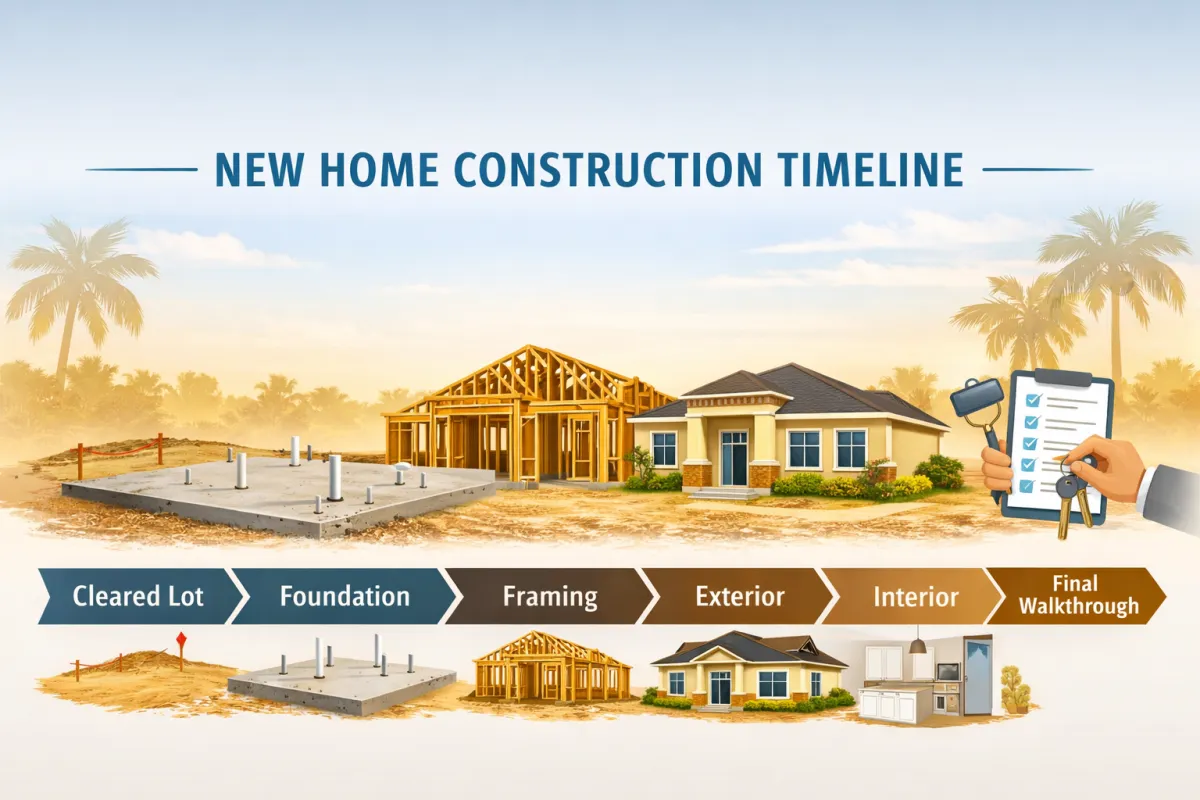
The most accurate schedule separates the project into pre-construction, permitting, site work, vertical construction, inspections, final completion, and closing.
Typical Brevard County New-Home Timeline
1. Builder, Lot, and Plan Selection: 1-6 Weeks
The timeline is usually shorter when the buyer selects an inventory home or a plan already engineered for a builder's standard lot. It can take longer when comparing multiple builders, purchasing land, modifying a plan, confirming setbacks, or completing soil, survey, environmental, utility, and financing research.
2. Contract, Financing, and Initial Deposits: 1-4 Weeks
A builder contract, deposit schedule, loan approval, construction-to-permanent financing, and lender conditions should be completed before the project moves forward. The Consumer Financial Protection Bureau explains that construction loans are generally short-term loans funded through a series of advances as work progresses.
Review the CFPB explanation of construction loans when comparing financing structures.
3. Design and Selections: 2-8 Weeks

Production builders may provide a limited design appointment. Semi-custom and custom projects can require architectural revisions, structural decisions, cabinet layouts, electrical plans, engineering, and multiple selection meetings. Delayed decisions can delay ordering and construction.
4. Engineering and Permit Preparation: 2-8 Weeks
Plans may require architectural or engineering work, energy calculations, truss documents, product approvals, surveys, drainage information, septic documentation, utility information, and builder licensing records. Incomplete submissions often create review comments and resubmittals.
5. Permit Review and Approval: Often 4-12 Weeks, Sometimes Longer
Timing depends on the jurisdiction, completeness of the application, workload, outside agency approvals, revisions, and whether the lot requires additional review. Palm Bay and Brevard County maintain separate permitting systems, so the responsible jurisdiction must be confirmed for the property.
Palm Bay provides an electronic building-permit and inspection system, while Brevard County publishes its new one- and two-family residence permit requirements and online tracking tools.
6. Site Preparation and Foundation: 3-8 Weeks

This stage may include clearing, fill, grading, temporary utilities, driveway access, excavation, underground plumbing, termite treatment, inspections, and slab placement. Rain, drainage, soil conditions, fill requirements, or septic work can affect the schedule.
7. Framing, Dry-In, and Exterior Shell: 4-10 Weeks

Walls, roof framing or trusses, sheathing, windows, exterior doors, roofing, and weatherproofing create the home's shell. Material availability, crew scheduling, engineering corrections, and weather may change the pace.
8. Mechanical, Electrical, and Plumbing Rough-Ins: 3-8 Weeks
HVAC, electrical, plumbing, low-voltage, fire-related components when applicable, and required inspections occur before insulation and drywall. Failed inspections or missing materials can create pauses.
9. Insulation, Drywall, and Interior Finishes: 6-14 Weeks
Drywall, texture, paint, cabinets, countertops, tile, flooring, trim, interior doors, fixtures, appliances, and finish carpentry are installed. This stage contains many interdependent trades, so one delayed item can affect several later activities.
10. Final Inspections, Punch List, and Closing: 2-6 Weeks
The builder completes final inspections, obtains required approvals, addresses punch-list items, completes the buyer's orientation, and prepares for closing. A certificate of occupancy or equivalent final approval is generally required before legal occupancy.
What Can Make the Build Faster?
Choosing a completed or nearly completed inventory home.
Selecting a standard plan without structural changes.
Using a homesite already controlled and prepared by the builder.
Completing financing and lender documentation early.
Making selections by the builder's deadlines.
Avoiding change orders after plans and materials are approved.
Working with a builder that has dependable trade partners and an organized permitting process.
Choosing readily available materials rather than highly specialized finishes.
What Commonly Delays a New Home?
Land, survey, title, setback, easement, drainage, or environmental issues.
Incomplete plans or permit applications and repeated review comments.
Well, septic, utility-extension, or service-availability questions.
Construction-loan underwriting, appraisal, or draw requirements.
Late design decisions or structural changes.
Backordered windows, trusses, cabinets, appliances, electrical equipment, or specialty materials.
Heavy rain, tropical weather, hurricanes, or storm-related labor and supply disruptions.
Inspection failures, engineering corrections, or work that must be redone.
Subcontractor and labor scheduling.
Buyer change orders after construction has started.
How Permitting and Inspections Affect the Schedule
The City of Palm Bay building-permit FAQs state that a building permit is required before construction under the applicable Florida Building Code. The state maintains current and developing code resources through Florida Building Code Online.
For properties under Brevard County jurisdiction, buyers and builders can review the county's building-permit portal, online permitting instructions, and public permit-search tools.
A lot requiring an onsite sewage system may also need separate review and inspections through the Florida Department of Health in Brevard County.
Production, Semi-Custom, and Custom Timelines
UILD TYPE
COMMON RANGE IT VARIES
Inventory / spec home
30 days to 6 months
Depends on how complete the home is when the buyer contracts.
Production to-be-built
Approximately 6-10 months after approvals/start
Uses a standard plan and established construction process.
Semi-custom home
Approximately 8-12 months or longer
More selections, plan changes, engineering, and coordination.
Custom home
Approximately 10-18 months or longer
Design, land development, engineering, specialty materials, and extensive decisions.
Questions Buyers Should Ask Before Signing
When does the builder's quoted construction timeline officially begin?
Is the estimate measured from contract, permit, slab, or vertical construction?
What approvals must happen before construction starts?
What is included in the price, and what remains an allowance?
Which selections have firm deadlines?
How are delays and change orders addressed in the contract?
Does the contract provide a guaranteed completion date or only an estimate?
How often will the buyer receive progress updates?
Can the buyer use an independent inspector during construction?
What happens to the buyer's rate lock or housing plans if completion is delayed?
When is the final walk-through, orientation, and closing scheduled?
How Buyers Can Plan Around the Timeline
Buyers should create a flexible moving plan rather than relying on the earliest projected completion date. Avoid giving notice on a rental, scheduling movers, selling a current home without a contingency plan, or locking a mortgage rate solely around an estimated date unless the risks are understood.
Build extra time into temporary housing, storage, school enrollment, travel, lease extensions, and rate-lock decisions. A realistic buffer reduces pressure when inspections, weather, materials, or final approvals move the schedule.
Final Answer
A new home in Brevard County often requires approximately six to ten months for a straightforward production build after major approvals and construction start. Semi-custom and custom projects commonly take nine to fifteen months or longer. The complete process can be longer when land, design, engineering, financing, permitting, utilities, septic, selections, inspections, weather, and closing are included.
The Villalobos Group helps buyers compare builders, contracts, construction stages, incentives, financing, inspections, and realistic completion expectations. Visit villalobosgrp.com to begin a Brevard County new-construction consultation.
Frequently Asked Questions
Can a new home be built in six months?
Yes, some standard production homes can be completed in roughly six months after permits and construction begin, but the full process may take longer and the schedule is not guaranteed.
Does the permit timeline count as construction time?
Not always. Builders define their timelines differently. Buyers should ask whether the quoted period begins at contract, permit issuance, slab, or vertical construction.
Are inventory homes faster?
Usually. A completed or nearly completed inventory home can close much sooner than a to-be-built home.
Why do custom homes take longer?
Custom homes require more design, engineering, land preparation, selections, specialty materials, decisions, and coordination.
Can weather delay construction in Brevard County?
Yes. Heavy rain, tropical systems, hurricanes, site drainage, and storm-related material or labor disruptions can affect schedules.
Can buyers inspect during construction?
Many builders permit independent inspections at specific stages, but the contract and builder policies control access and scheduling.
What happens if the home is delayed?
The contract determines the parties' rights and obligations. Buyers should also plan for rate-lock extensions, temporary housing, storage, and moving-date changes.
Should I sell my current home before the new home is finished?
That depends on financing and risk tolerance. Buyers should coordinate the sale, contingency, leaseback, temporary housing, and lender requirements carefully.
