New Construction vs. Resale Homes in Palm Bay: Which Is Better?
THE VILLALOBOS GROUP
New Construction vs. Resale Homes in Palm Bay: Which Is Better?
A Complete 2026 Buyer Comparison from The Villalobos Group
The direct answer
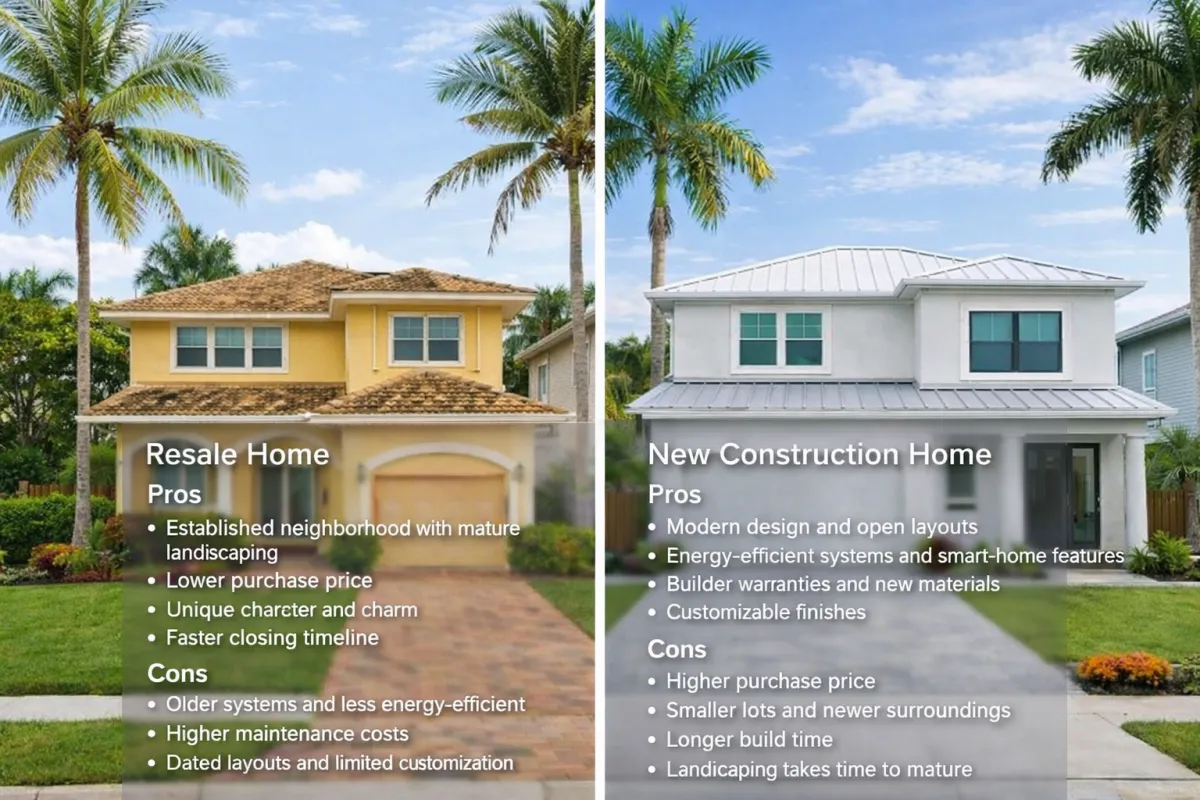
Neither option is automatically better. New construction may offer current layouts, warranties, energy efficiency, builder incentives, and lower immediate maintenance. A resale home may offer a stronger established location, mature landscaping, completed improvements, faster occupancy, and more negotiating flexibility. The better choice depends on the complete monthly cost, location, timeline, property condition, builder terms, and long-term resale position.

Why This Decision Matters in Palm Bay
Palm Bay gives buyers an unusually broad choice between new and existing homes. Buyers may compare a completed inventory home, a home under construction, a to-be-built plan, a custom build, a recently completed resale, or an older home in an established neighborhood.
That variety is valuable, but it can also make the decision confusing. A lower resale price may come with an older roof, insurance challenges, deferred maintenance, or renovation costs. A higher new-home price may be offset by builder incentives, lower near-term repairs, newer systems, or financing support. The correct comparison is not simply sales price against sales price.
New Construction: The Main Advantages
1. Current Floor Plans and Design
New homes are more likely to include open living areas, larger kitchens, walk-in pantries, flexible rooms, higher ceilings, larger primary suites, modern electrical needs, and layouts designed for today's lifestyles.
2. Lower Immediate Maintenance
A newly completed home generally begins with a new roof, HVAC system, plumbing, electrical components, appliances, windows, and finishes. That does not eliminate maintenance, but it can reduce the likelihood of major replacement expenses in the first years of ownership.
3. Builder Warranty Protection
Builders commonly provide limited warranties covering different components for different periods. Warranty terms vary significantly, so buyers should review what is covered, how claims are submitted, exclusions, transferability, and who is responsible for service.
4. Energy and Building-Code Benefits
New homes must be permitted and inspected under the applicable building code in effect for the project. Newer construction may include more efficient systems, insulation, windows, appliances, and mechanical equipment than an older home.
The Florida Building Commission maintains the statewide building-code resources used by local jurisdictions.
5. Builder Incentives
Depending on the builder, inventory, lender, and market, incentives may include closing-cost assistance, interest-rate buydowns, design credits, appliance packages, reduced lot premiums, or price adjustments. Incentives are not free money; buyers should compare the rate, fees, purchase price, lender requirements, and long-term cost.
6. Personalization Opportunities
When construction timing allows, buyers may select flooring, cabinets, countertops, tile, fixtures, paint, electrical options, structural features, or lot placement. Every selection should be documented with price, deadline, and contract treatment.
7. Construction-Stage Inspections
Many buyers choose independent inspections at foundation, pre-drywall, and final stages when permitted by the builder and contract. These inspections can identify concerns before they are concealed or before closing.
Palm Bay explains its building-permit and inspection process, while Brevard County publishes requirements for new one- and two-family residences.
New Construction: The Main Tradeoffs

1. Completion Dates Can Move
Permitting, weather, inspections, material availability, labor, utilities, financing, and change orders can delay completion. A builder's schedule may be an estimate rather than a guaranteed date.
Permit progress can often be researched using Brevard County's public permit-search tools or the applicable municipal system.
2. The Base Price Is Rarely the Final Price
Lot premiums, structural options, design selections, utility charges, lender fees, closing costs, window treatments, appliances, landscaping, fencing, and post-closing projects can change the total investment.
3. Builder Contracts Favor the Builder
Builder contracts are usually written by the builder and may contain different deadlines, deposit rules, financing requirements, inspection access, dispute procedures, delay provisions, and cancellation rights than a standard resale contract.
Buyers using construction financing should understand that a construction loan is generally a short-term loan funded through advances as construction progresses.
4. New Neighborhoods May Still Be Developing
Construction traffic, vacant lots, changing views, incomplete amenities, landscaping growth, and future phases may affect the early ownership experience.
5. The Home May Feel Less Established
Newer communities may have smaller trees, less mature landscaping, and fewer completed homeowner improvements. Buyers should also understand HOA rules, architectural controls, and future fee obligations where applicable.
Resale Homes: The Main Advantages

1. Established Location
A resale buyer can see the completed street, neighboring homes, landscaping, traffic patterns, nearby development, and practical commute. There is less guesswork about how the immediate area will look at move-in.
2. Faster Occupancy
A resale transaction may close in several weeks rather than requiring months of construction. This can be important for buyers relocating for work, coordinating a lease, or selling another home.
3. Mature Landscaping and Completed Improvements
A resale may already include a fence, pool, screened porch, window treatments, upgraded lighting, storage, landscaping, gutters, or other improvements that can be expensive after closing.
4. Potential Negotiating Flexibility
Depending on the seller and market, resale buyers may negotiate price, closing costs, repairs, personal property, occupancy, or other terms. Builder negotiations often focus more on structured incentives and inventory priorities.
5. Character and Larger Established Lots
Some resale neighborhoods provide architectural variety, mature trees, larger lots, or locations closer to established services and employment corridors.
6. Known Finished Product
The buyer can inspect the actual home rather than relying on a model, rendering, sample selections, or a different homesite.
Resale Homes: The Main Tradeoffs
1. Repairs and Replacement Costs
Roof, HVAC, water heater, plumbing, electrical, windows, appliances, pool equipment, and other systems may require immediate or near-term work.
2. Insurance Can Change the Equation
Roof age, wind mitigation, electrical systems, plumbing type, prior claims, and property condition can affect eligibility and premium. Buyers should obtain insurance guidance early, not after the inspection period.
The Florida Office of Insurance Regulation provides consumer resources, and parcel-specific flood information can be researched through the FEMA Flood Map Service Center.
3. Renovations Can Become Expensive
A home priced below new construction may still cost more after flooring, kitchen, bathroom, paint, windows, roof, landscaping, or layout changes are completed.
4. Older Layouts May Not Match Current Preferences
Smaller kitchens, formal rooms, lower ceilings, limited storage, fewer outlets, and smaller primary suites may require compromise or renovation.
5. Inspection Findings Create Uncertainty
A resale inspection may uncover roof, moisture, structural, electrical, plumbing, HVAC, drainage, pool, or permit concerns. The contract controls the buyer's remedies and deadlines.
The Comparison Buyers Should Actually Make
CATEGORY
NEW CONSTRUCTION
RESALE HOME

Move-in timeline
May be immediate for completed inventory or months for a build
Often several weeks after contract
Initial maintenance
Usually lower, but warranty procedures matter
Depends on age and condition
Financing
May include builder or preferred-lender incentives
Buyer can compare broad lender options
Negotiation
Often structured around incentives and inventory
May include price, repairs, credits, or terms
Location
May be in a developing area
Often an established neighborhood
Customization
Possible before construction deadlines
Usually completed after closing
Insurance
Newer features may help, but quotes are still required
Roof and system age may materially affect cost
Inspection
Stage inspections may be possible
Inspection evaluates the completed existing home
Upfront extras
Lot, options, blinds, fence, appliances, landscaping
Repairs, replacements, and remodeling
Resale position
Depends on builder, location, lot, competition, and upgrades
Depends on condition, location, improvements, and neighborhood demand
Compare the Complete Monthly Cost
A useful comparison includes principal and interest, taxes, homeowners insurance, flood insurance when applicable, HOA or CDD obligations, utilities, maintenance reserves, immediate repairs, planned improvements, lender fees, and cash needed at closing.
The Consumer Financial Protection Bureau's homebuying tools can help buyers compare loan estimates and organize the financing and closing process.
When New Construction May Be the Better Choice
·You want a current floor plan and do not want immediate renovation.
·You value new systems, warranties, and lower near-term maintenance.
·The builder incentive meaningfully improves your complete financing picture.
·You have flexibility in your move date.
·You want to make selections and understand the deadlines and costs.
·The new-home location, lot, and future surroundings fit your lifestyle.
·You are comfortable reviewing a builder-specific contract and construction process.
When a Resale Home May Be the Better Choice
·You need to move sooner.
·You prefer an established neighborhood or specific location.
·The home already includes expensive improvements you would otherwise add.
·You want to inspect and evaluate the exact finished property.
·The resale price plus repairs and insurance remains more favorable.
·You value mature landscaping, a larger lot, or architectural variety.
·The seller's terms provide useful negotiating flexibility.
Questions to Ask Before Choosing
·What is my true monthly payment for each option?
·How much cash will I need before and at closing?
·What repairs, upgrades, or missing items will I pay for after closing?
·What is the realistic move-in date?
·How do insurance quotes compare?
·What inspections are permitted and recommended?
·What warranties apply and how are claims handled?
·What builder, seller, lender, HOA, or title requirements apply?
·How does the location affect commute and everyday life?
·Which property has the stronger long-term resale position for my needs?
Final Verdict
New construction may be better for the buyer who wants modern design, new systems, warranties, and structured incentives. A resale home may be better for the buyer who values an established location, quicker occupancy, completed improvements, and greater flexibility.
The strongest decision comes from comparing the exact homes, not stereotypes. A well-located resale in excellent condition may outperform a poorly chosen new build. A thoughtfully selected new home with favorable financing and a strong lot may be a better long-term decision than a lower-priced resale needing extensive work.
The Villalobos Group helps Palm Bay buyers compare builders, resale properties, contracts, incentives, inspections, insurance considerations, monthly payments, and resale position. Visit villalobosgrp.com to schedule a personalized new construction versus resale consultation.
Frequently Asked Questions
Is new construction more expensive than resale in Palm Bay?
New construction may have a higher advertised price, but builder incentives, newer systems, insurance characteristics, and lower immediate repair needs can narrow the difference. Compare the complete cost.
Do I need a real estate agent when buying from a builder?
A builder's sales representative represents the builder. Buyers may choose their own representation, subject to the builder's registration policies and contract terms.
Can I inspect a new construction home?
Many builders allow independent inspections at defined stages, but access and scheduling are controlled by the contract and builder policies.
Are builder incentives always a good deal?
Not automatically. Compare the interest rate, fees, lender requirements, purchase price, closing costs, and long-term payment.
Is a resale home easier to negotiate?
Often, but not always. Negotiating power depends on the seller, property, market, competition, and contract terms.
Which option is better for insurance?
Newer construction features may be favorable, but every property requires an actual quote. Resale eligibility and cost can depend heavily on roof age, systems, mitigation features, and condition.
Should I buy an inventory home or build from the ground up?
An inventory home offers faster occupancy and a known construction stage. A to-be-built home may provide more choices but requires more time and carries scheduling uncertainty.
How should I compare a new home and a resale home?
Use a side-by-side comparison of total price, cash to close, monthly payment, insurance, repairs, upgrades, timeline, location, contract, and long-term resale position.
